


The Diamond
Defined by its origin, worn with honesty
April’s birthstone is known as the hardest natural substance on Earth and perhaps the one that carries the greatest weight of unasked questions.
There is often a moment—perhaps you have experienced it—when a diamond is placed before you. The instinct is immediate: to admire its light, its clarity, its presence. Its brilliance has a way of holding attention, of quieting questions before they fully form.
At AGUAdeORO, this is precisely where we begin.
A Stone Born Under Pressure
The diamond is traditionally associated with April, a designation formalized in 1912 by the American National Retail Jewelers Association, though its symbolic history reaches much further back. In ancient India, it was known as vajra, meaning thunderbolt, and believed it could ward off evil, bring clarity of mind and attract abundance. While the Romans believed diamonds to be fragments of fallen stars, in medieval Europe, diamonds were occasionally reduced to powder and used in medicinal preparations—practices rooted more in belief than in science.
Scientifically, a diamond is crystallized carbon formed under extreme pressure and heat deep within the Earth’s mantle, typically around 150 kilometers below the surface. Over vast spans of time—often billions of years—this transformation gives rise to a material of exceptional hardness and optical brilliance.
Yet understanding how a diamond forms is only part of the story.
Beauty, Meaning and Narrative
Few gemstones carry as much cultural weight as the diamond. In popular culture, it has long been associated with glamour, desire and timeless allure.
Marilyn Monroe helped shape this perception, famously popularizing the phrase “Diamonds are a girl’s best friend,” embedding the stone within a broader narrative of beauty, aspiration and enduring appeal.
Its association with love and commitment, often perceived as ancient, is in fact relatively recent. In 1947, De Beers introduced the campaign “A Diamond Is Forever,” a defining moment that established the diamond engagement ring as a near-universal symbol of devotion.
This history does not diminish the emotional meaning diamonds hold today. Rather, it reveals how narratives are formed—and how they evolve. To understand a diamond fully is to recognize both its symbolism and the context that shaped it.


The Question of Origin
Behind the beauty of many diamonds lies a more complex reality. The traditional diamond industry has, in certain regions and periods, been associated with environmental degradation, unsafe working conditions, and socio-economic imbalance. Certification systems such as the Kimberley Process have introduced safeguards, yet they do not address all ethical or environmental concerns.
For a growing number of clients, the essential question is no longer only what a diamond is, but where it comes from and what it represents.
A Transparent Alternative
This is why AGUAdeORO works with lab-grown diamonds.
Created in controlled environments that replicate the natural conditions of diamond formation, these stones possess the same chemical composition, crystalline structure, and physical properties as mined diamonds. Their hardness remains at 10 on the Mohs scale, and their brilliance follows the same optical principles.
What differs is not the nature of the stone, but the clarity of its origin.
A lab-grown diamond offers:
It allows the wearer to choose not only beauty, but coherence between values and object.
Perhaps the true value of a diamond lies not only in how it shines, but in the story we choose to stand behind.
FAQ
Are lab-grown diamonds “real” diamonds?
Yes. lab-grown diamonds are chemically, physically, and optically identical to mined diamonds. The only difference lies in their origin.
Can I create a custom piece with a lab-grown diamond?
Yes. AGUAdeORO offers bespoke creations, from engagement rings to personal pieces, using lab-grown diamonds and Fairtrade gold.
Why does the origin of a diamond matter?
A diamond carries more than physical beauty. Its origin reflects a journey, whether geological or human, and understanding that journey brings greater meaning to the piece you choose to wear.
Do lab-grown diamonds have the same durability as mined diamonds?
Yes. lab-grown diamonds have the same hardness (10 on the Mohs scale), refractive index, and durability as mined diamonds, making them equally suitable for everyday wear and long-term use.
Read more
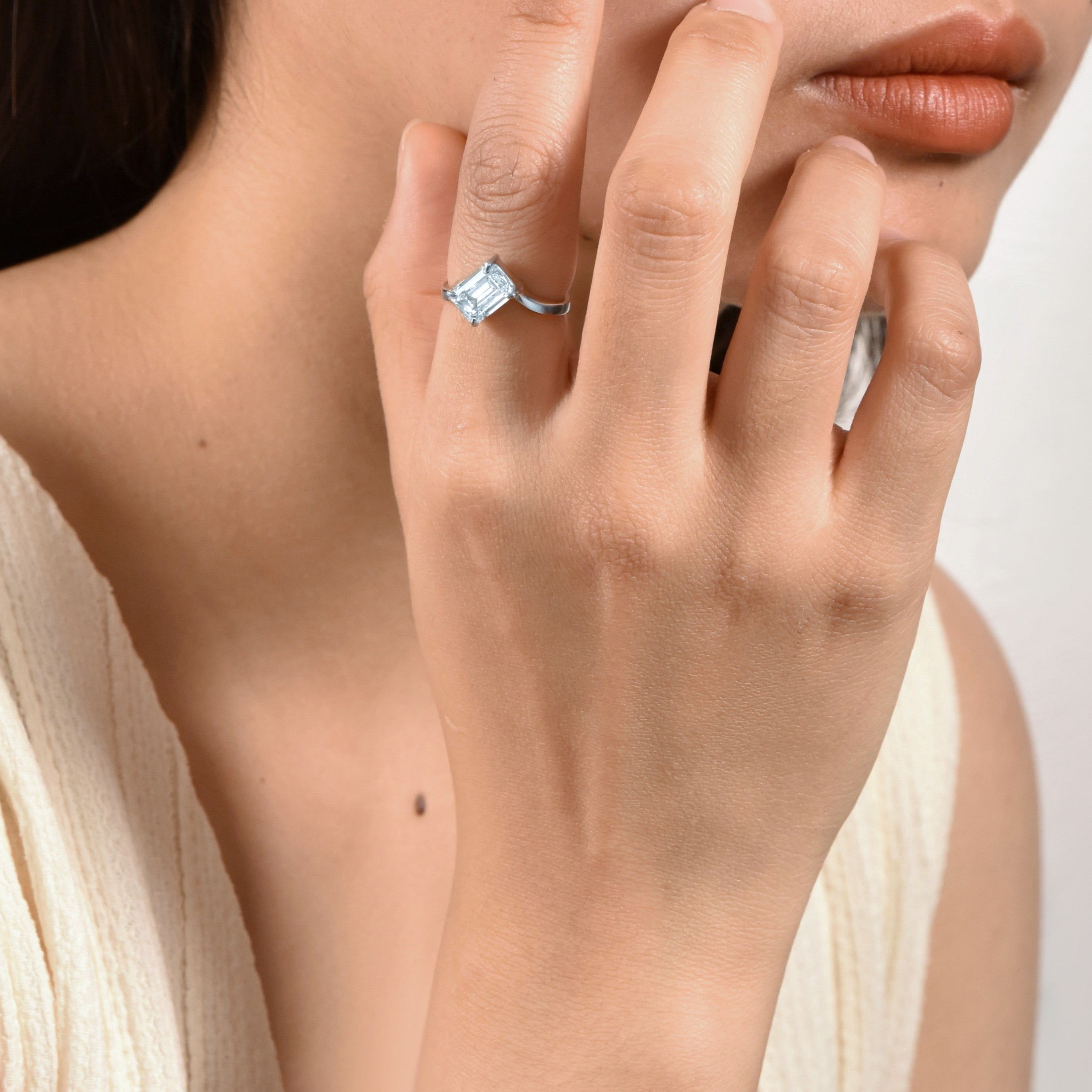
Diamonds are perfectly suited to everyday wear thanks to their exceptional durability. Discover why proper setting, simple care, and regular maintenance help preserve their beauty over time.
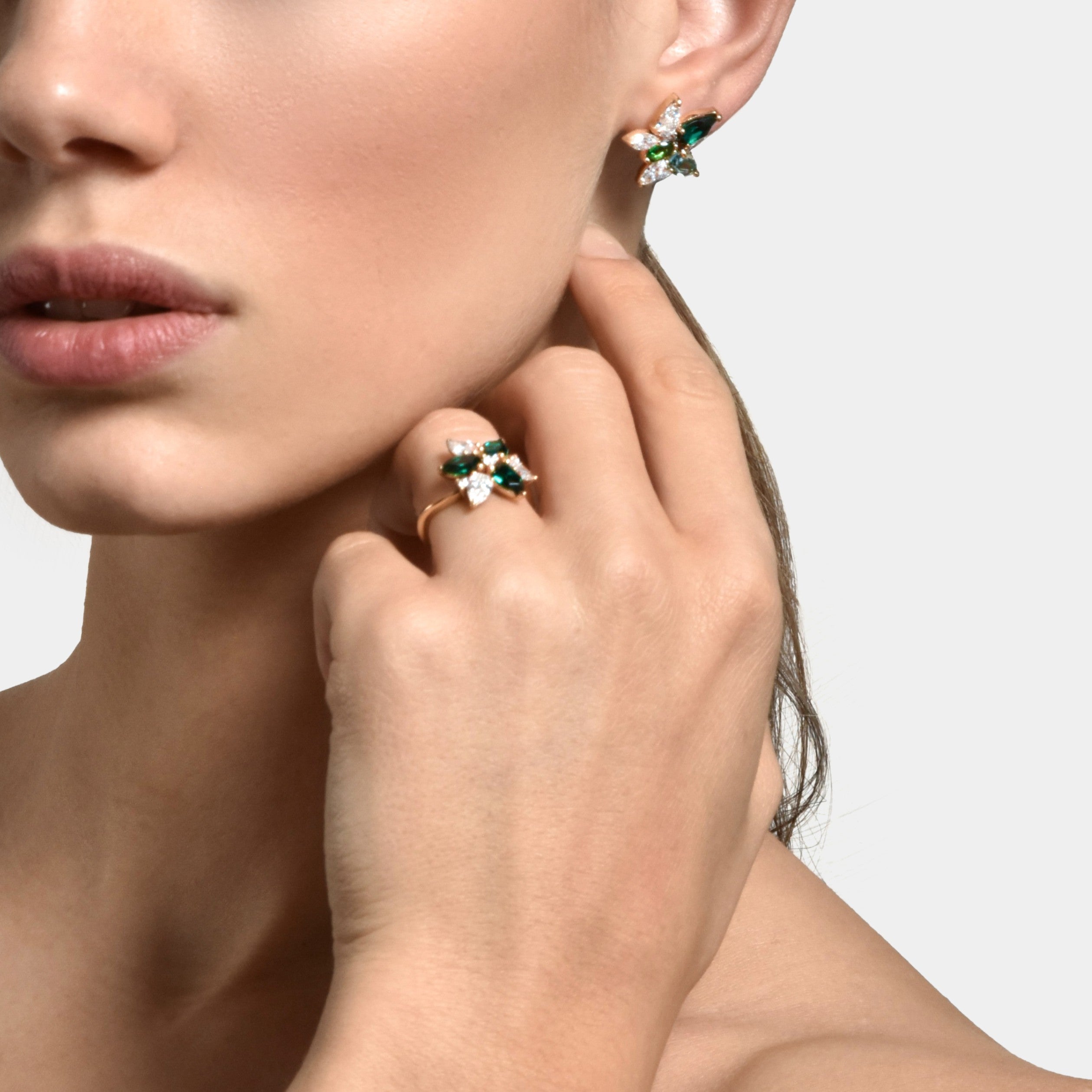
As May’s birthstone and the gemstone of the 20th wedding anniversary, the emerald embodies depth, loyalty, renewal, and the beauty of a love that endures over time.